
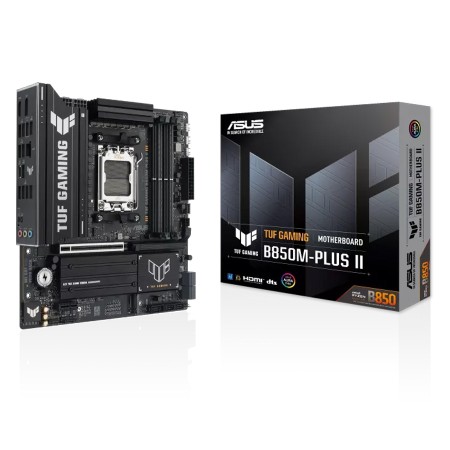
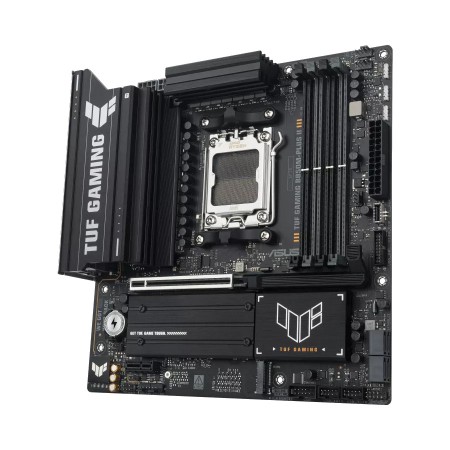
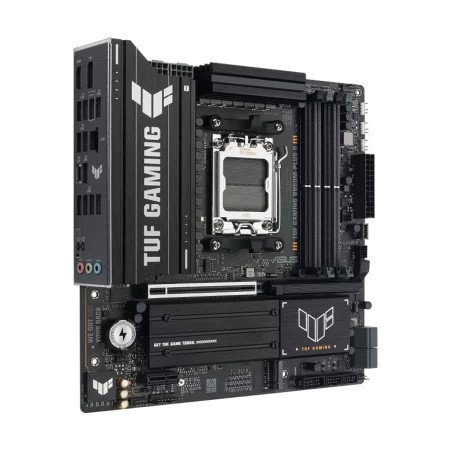
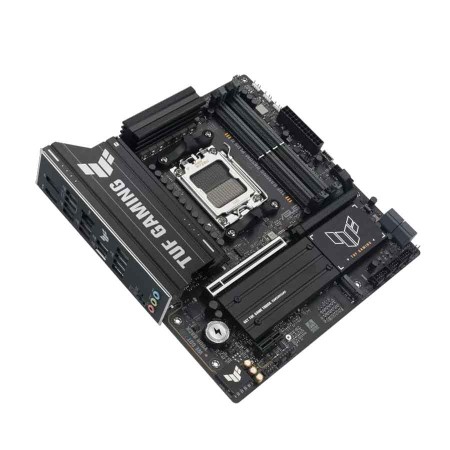
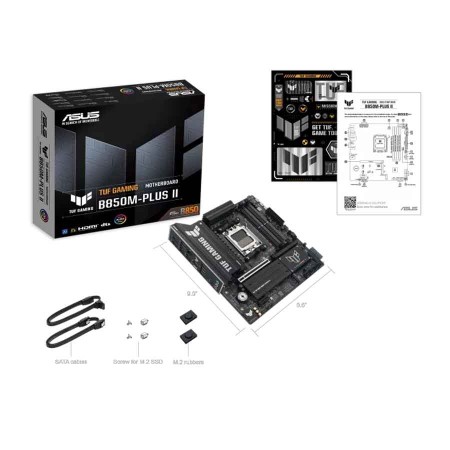
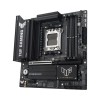
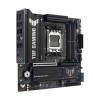
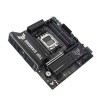
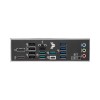
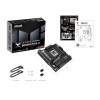

The ASUS TUF GAMING B850M-PLUS II is a robust Micro‑ATX motherboard from the TUF Gaming lineup, designed for modern AMD Ryzen CPUs with the AM5 socket and high-speed DDR5 memory. It delivers excellent gaming and professional performance with extensive expansion, ultra-fast storage, advanced audio, and networking features.
Key Features:
Supports AMD Ryzen 7000/8000/9000 Series processors on AM5 socket.
Supports DDR5 memory up to 256 GB, OC speeds up to 8000 MT/s, with AMD EXPO/AEMP support.
Multiple PCIe expansion slots:
1 × PCIe 5.0 x16 (x16 mode)
1 × PCIe 4.0 x16 (x8/x4 mode)
1 × PCIe 4.0 x1
RAID support via AMD RAIDXpert2 (0/1/5/10 depending on CPU).
Storage: 3 × M.2 slots, 4 × SATA 6 Gb/s ports.
USB connectivity: USB‑C 20 Gbps, USB‑A 10 Gbps/5 Gbps/2.0, USB Type-C® power delivery 5V/3A.
Realtek 2.5 Gb Ethernet with TUF LANGuard protection.
High-quality 7.1 channel audio with Realtek ALC1220P, internal amplifier, impedance sensing, and de-pop circuitry.
VRM & M.2 heatsinks, comprehensive cooling, and pre-mounted I/O shield.
Technical Specifications:
Form Factor: Micro‑ATX
Chipset: AMD B850
Memory Slots: 4 × DDR5 DIMM, up to 256 GB
Expansion Slots:
1 × PCIe 5.0 x16 (x16 mode)
1 × PCIe 4.0 x16 (x8/x4 mode)
1 × PCIe 4.0 x1
Storage:
M.2_1: PCIe 5.0 x4 / 4.0 x4 depending on CPU, 2280
M.2_2: PCIe 4.0 x4/x2 depending on CPU, 2242/2260/2280
M.2_3: PCIe 4.0 x4, 2280
4 × SATA 6 Gb/s
RAID: 0/1/5/10 depending on CPU
Networking: Realtek 2.5 Gb Ethernet
Audio: Realtek ALC1220P 7.1 HD, supports Jack-detection and Multi-streaming
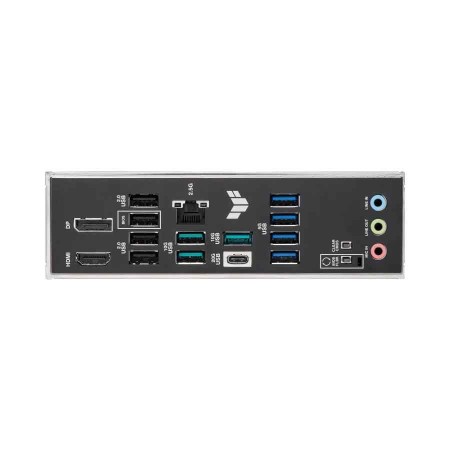
Rear I/O Ports:
1 × USB‑C 20 Gbps
3 × USB‑A 10 Gbps
4 × USB‑A 5 Gbps
4 × USB‑A 2.0
1 × DisplayPort
1 × HDMI
1 × Ethernet 2.5 Gb
3 × Audio jacks
BIOS FlashBack™ & Clear CMOS buttons
Internal I/O Connectors:
4 × Fan/Pump headers
24-pin Main Power, 2 × 8-pin CPU Power
USB headers: 1 × USB‑C 10 Gbps, 1 × USB‑A 5 Gbps header (supports 2 additional USB ports), 2 × USB 2.0 headers (supports 4 additional USB ports)
3 × Addressable RGB Gen 2, Chassis Intrusion, COM Port, Front Panel Audio, Front Panel System Header